

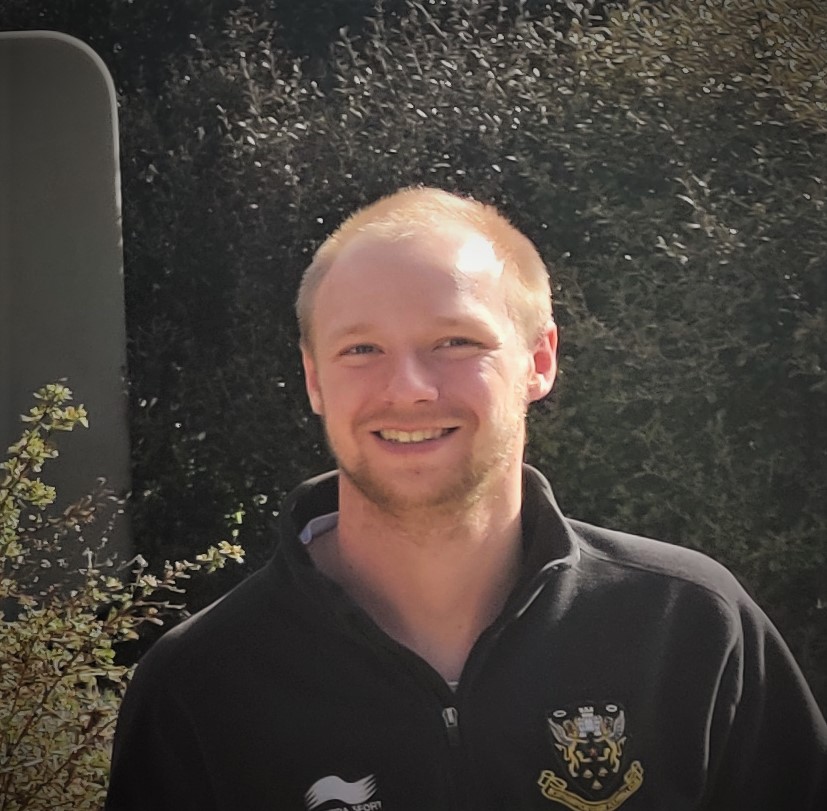
PATRICK SULLIVAN
Whenever recounting my pathway into engineering, I like to emphasise that pre-Arkwright I was adamant I did not want to be an engineer. You see, I wanted to be an inventor. Because the job ‘inventor’ sounds cooler, right? I dreamt of whacky solutions to global problems, could not understand the fixation on traditionally fuelled cars, and as a teenager came up with oh-so necessary designs such as the hands-free toothbrush and the single-item dishwasher (patents pending and never to be received).
Enthusiastic and strong-minded as I was, I divulged these grand plans to anyone and everyone who would listen. That was until one family friend informed me when I was in my mid-teens that “inventors don’t exist anymore”. Surely it could not be? What about James Dyson and his funky bagless vacuum cleaners? What about Tom Pellereau, winner of the 2011 Apprentice and reinforcer of my grand career plans? Well, apparently, they were just not-so-humble engineers.
I still needed convincing because – let’s be honest here – “engineer” just does not sound as glamourous as “inventor”. Soon after, however, my Product Design teacher took me to one side in class and asked if I was any good at Maths or Physics. He wanted to nominate me for the Arkwright Engineering Scholarship. I had no idea what it meant, but it sounded more glamourous than engineering had ever done before and a little bit of cash was all the genius Oral Hands-Free™ needed to make it to market.
Little did I know that the true benefit of Arkwright was not the cash – which I spent attempting to build an automatic, light sensitive cat flap I had invented for my beloved cat Benji – but the insight into what engineering actually entails and the industrial exposure. Inspired by the ceremony, the new engineering role models in my life, and the three weeks paid work experience at TTP Group, the design consultancy who sponsored me, I was sold on a life as an engineer. I knew now the job role of “engineer” encompassed design, applied maths, sciences, and, crucially, invention or, as I now say as I work on less consumer-focused technologies, ‘out-the-box thinking’.
Following my two years as an Arkwright Scholar, I found my perfect university degree and secured a place, thanks largely to the experiences gained from my Scholarship. The five years (2015-2020) were hectic, stressful, and incredibly exciting as I completed the Engineering Design course at University of Bristol – a multi-disciplinary degree programme with dedicated time in industry. Despite looking at Mechanical Engineering courses at the application phase, as I gained greater understanding during my first year of studies, I decided to specialise in Aerospace.
In the summer of 2016, I spent 12 weeks at Safran Seats UK (then named Zodiac) working on the design of business class aircraft seating. In my second year, suddenly I was studying rocket structures, propulsion, and flight dynamics, as well as continuing broader studies in engineering maths and design. I went back to Safran Seats (still at the time called Zodiac) for my assessed year in industry, except this time was placed in the Stress team. I found my place in stress analysis and was obsessed with my research into the design factors (e.g. cushion stiffness, seat pitch, etc) affecting the head injury score of a premium economy seat during crash testing. In terms of the glamour I always craved, nothing beat the moment of firing a test seat across a room at 16g while, next door in the facility, Koenigsegg were testing a new sports car.
My time at the company also introduced me to two key areas of research: composite materials and circular economy. I now have a career in composite materials, one I never expected as a wannabe inventor and one which proves the shear breadth of engineering as a subject. I spent four years as a Research Engineer in the Sustainability team at the National Composite Centre (NCC) research the recycling of carbon fibre based materials in aerospace. My research went towards an industrial doctorate qualification which I should be graduating from soon.
It followed a three-month placement at NCC in Summer 2019, where I mostly worked on projects using automated fibre placement to lay up carbon fibre. Automation is certainly a key theme of modern engineering, and optimising the processes and design methodologies for specific manufacturing methods can lead to a significant reduction in energy and material waste.
Since September 2024, I have worked at GKN Aerospace at their Global Technology Centre as a Composites Research Engineer. My role focuses on scaling up promising technologies to be ready to use in production environments for the next generation of aircraft. There is a key requirement for our technologies to greatly reduce the environmental impact of the aerospace industry and provide the solutions for net-zero flying in the future.
Hopefully, you can tell I needed convincing that a career in engineering was going to be exciting enough. With the help of Arkwright, industrial experience and my degree, I have found it to be more exciting than I ever expected, and the number of opportunities and different roles within the subject has meant my early experiences have been hugely varied and allowed me to travel as well. As much as my teenage self would be aghast at the idea, I find the work within sustainability and manufacturing to be far more rewarding and suited to me than designing whacky household appliances.