

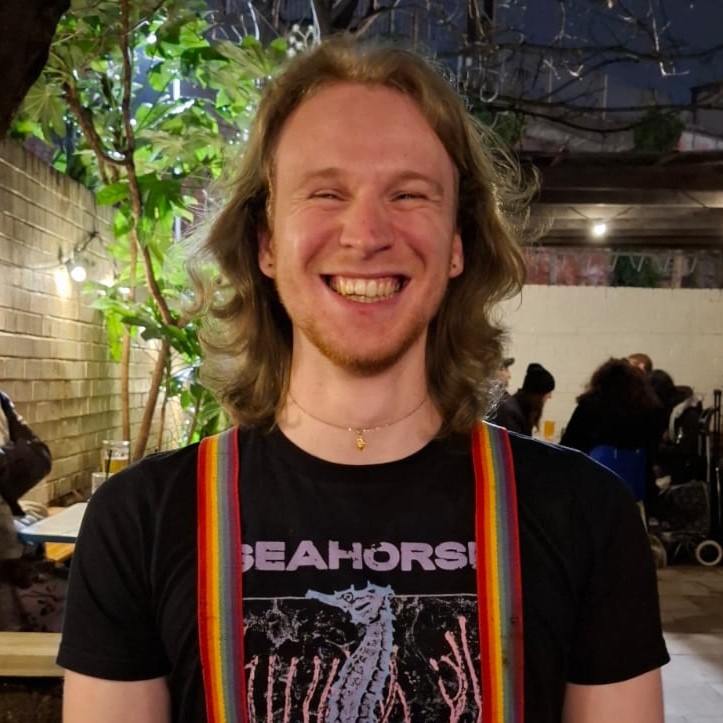
THOMAS IRISH
I first learned about engineering in year 10 when my resistant materials teacher introduced me to the Arkwright Engineering scholarship. I mentioned it to my parents, my father who works as a electronic engineer and my mother who is a nurse encouraged me to pursue the opportunity.
During my time as an Arkwright Scholar, I realised I wanted to become a medical engineer. I wanted to combine my Mother and Father’s vocations and solve problems within the medical field, specifically designing and manufacturing prosthetics, implants or other tools that may help someone tackle the day in an easier way than before.
How did you use your Scholarship funding?
I was interested in 3D modelling via fusion 360, so I purchased a 3D printer and some PLA/PET-G filament; I also purchased parts for an RC drone.
However, the best use of my bursary was paying for travel to attend the trips provided by the scholarship. I attended 2 RAF trips, a DePuy Synthes trip amongst many others. The trips were a great opportunity to network, learn, but most of all, have fun. This really helped me develop teamwork, leadership and social skills alongside making me the most confident and happy version of myself.
What did you gain from your Arkwright Scholarship? (Any stand-out experiences? Did it open any doors for you?)
I gained so much from my scholarship: reliable connections in the engineering industry, and life-changing learning experiences from the trips and connect days. During my trips with the RAF, I learnt valuable lessons regarding teamwork and leadership that I will take with me through my working career. I also learnt how underappreciated state school students are when it comes to achieving opportunities such as this scholarship.
I always felt, as a state school student, the scholarship was mostly taken upon by private school students. I am delighted to hear that it is now being marketed more towards state-school students who otherwise may not have these opportunities. I have often returned to my old school to advertise the scholarship to prospective students and help in any way possible to give them the best chance of reaching their potential.
Since applying for Arkwright, I have gained an interest for a constantly developing industry that I can never shake. My engineering skills since enrolling have improved and it has made me more curious than ever at how the world operates.
Where are you studying now, what subject, and how you are finding it so far?
I studied Medical Engineering at the University of Leeds. When I finished my second year I am looked for summer internships before starting my 3rd, I actually ended up doing one between my 3rd and 4th combining medical engineering and ballet. My scholarship taught and encouraged me to always aim higher and improve in everything I do. I am now coming towards my 10th month in a PhD I started also in Leeds under the Institute of Medical and Biological Engineering funded through a competitive EPSRC doctoral training program grant.
If you wish to read further on my research, it is briefly described on my Uni of Leeds profile: https://eps.leeds.ac.uk/mechanical-engineering/pgr/15516/tom-irish
I thoroughly enjoyed my time as an undergrad. I was studying mandatory-only modules through years one and two and it felt like forever. Once I could finally specialise, my fascination of the use of engineering to solve medical problems grew tenfold. Now I am studying for my PhD, I have been able to work with some of the researchers in the field in Medical Engineering and I would argue that I was able to get this far with the skills that the scholarship provided me at the start and throughout.
Outside of studying, the confidence I gained from Arkwright has translated into finding many hobbies and sports I thoroughly enjoy that I never would’ve found without it. I was able to give back to these clubs by sitting on committees as treasurer, secretary and/or president across them.
What are your plans for the future? What career path are you hoping to pursue?
Before I started my PhD, I wanted to design implants, devices, prosthetics – the list goes on – to solve the problems faced by patients or people day-to-day. Now I am working on cutting edge novel research of external fixation frames. My supervisors continue to inspire me and remind me when times get hard “even when the research doesn’t go to plan, and things get hard, always remember that it will benefit the patient”. For me that’s what medical engineering is about. And any career path that I can better someone’s day-to-day life, I will pursue.