


When conversations turn to social mobility, the focus is often placed on educational attainment. We talk about grades, qualifications and widening participation. These are all important, but they can overlook a less visible factor that shapes young people’s futures: access to networks.
A talented young person may have all the potential needed to thrive in STEM. Yet if they’ve never met an engineer, visited a workplace, spoken with someone in industry or heard about the opportunities available to them, that potential may never be fully realised.
The recent publication of the Social Value Commission’s Social Value Need Index highlights how access to opportunity varies across the UK. Differences in education and skills, employment, transport and digital connectivity all influence how easily young people can access information, experiences and professional connections.
Talent can be found everywhere. Opportunity can be harder to come by.
Why the network gap matters
Success is rarely shaped by qualifications alone. Awareness, encouragement and connection often play an equally important role.
Young people with strong professional networks are more likely to hear about scholarships, work experience, apprenticeships and emerging career pathways. They are also more likely to meet role models who can help them understand unfamiliar industries and see where they might fit within them.
For those without these connections, opportunities can remain hidden. Not because of a lack of ambition, but because they have less access to the knowledge and relationships that help open doors.
This is particularly significant in STEM. A conversation with an engineer, a workplace visit or an introduction to a mentor can transform an interest into a clear ambition. Those experiences help young people understand what careers in STEM look like and, importantly, believe they belong there.
If social mobility is to reflect potential rather than circumstance, access to professional connections must widen alongside access to education.
Building connections through the Arkwright Engineering Scholarships
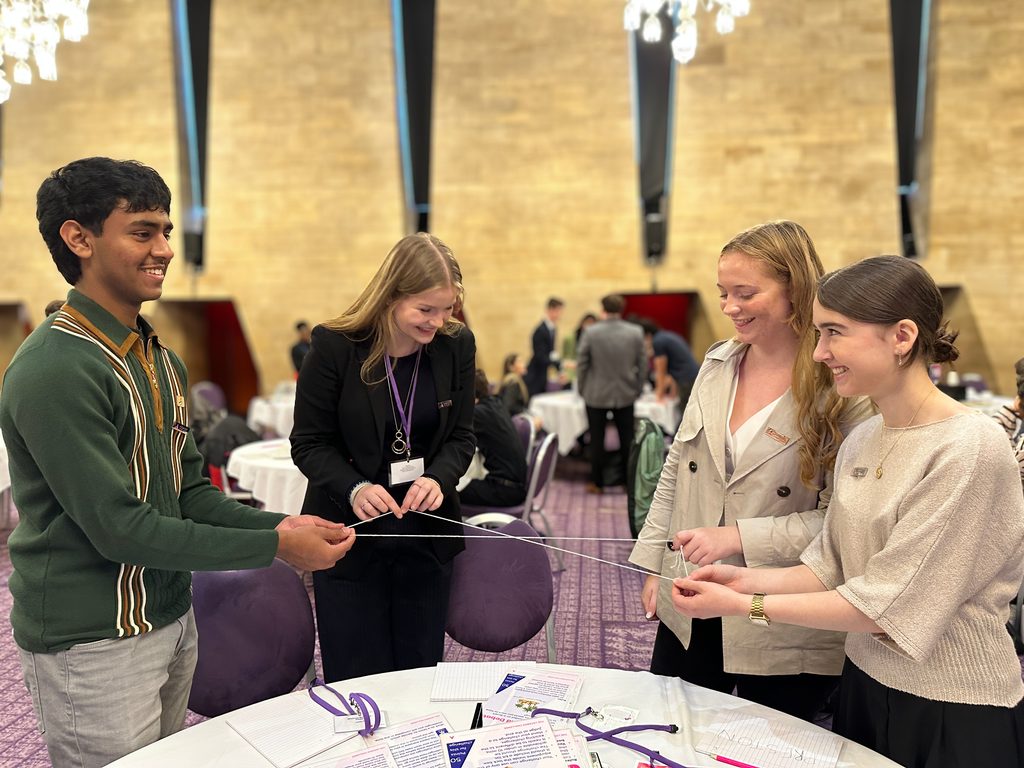
The Arkwright Engineering Scholarships show how that access can be built over time. For 35 years, the programme has supported individual students while building a powerful network of scholars, alumni, mentors and employers with a shared commitment to engineering.
Historically, the Arkwright network has been made up predominantly of young people from independent schools. Today, the relationships built through the programme are helping to support a much more inclusive future, with the scholarship itself now specifically focusing on increasing state school applications. Former scholars remain connected long after their scholarships end: they become mentors, open doors for younger students and encourage their employers to sponsor and support the programme.
For many Arkwright scholars, networking events are their first opportunity to meet people who share their passion for STEM. Regardless of their background, they are actively encouraged to start building relationships with fellow scholars, alumni, mentors and employers, rather than waiting until university or the workplace to develop a professional network.
Those early conversations help young people realise their potential: they build confidence, broaden their understanding of engineering and learn to see themselves as part of the profession. Just as importantly, they begin to form the trusted groups of peers and advocates who can share advice, make introductions and support them throughout their careers.
Over the years, this creates a virtuous circle. The connections formed through Arkwright continue to strengthen the programme, while giving each new cohort access to people, workplaces and opportunities that might otherwise feel out of reach.
Former scholar Rachel Piper, now a Chartered Civil Engineer and an Arkwright mentor, shows how that connection can come full circle. Reflecting on the influence the scholarship had on her career, she said:
“The programme helped me so much, allowing me to attend university residential courses, undertake work experience, and engineering insight days at a number of companies. The advice I received from my mentor during this time was also invaluable and ultimately these experiences led to me becoming the Civil Engineer I am today.”
“There are so many opportunities for students to learn more about the world of engineering and to enable them to have a lot to talk about and to make them stand out when applying for university or apprenticeships – sometimes they just need to be told they have nothing to lose and to have the confidence to pursue them!”
As a new cohort begins its Arkwright journey this month, it joins a network shaped over 35 years and is invited to strengthen it for those who follow. These connections do not happen by chance: they are intentionally created so that access to influential relationships is not determined by background, geography or circumstance.
Sharon, who received an Arkwright Scholarship in 2024 and is now studying Mechanical Engineering at Imperial College London, described how meeting others through the programme strengthened both her sense of belonging and her confidence:
“I really enjoyed meeting other scholars and forming friendships and being able to talk to other people in my position who want to do the same thing as me.”
“It helped me have more confidence in myself and believe that I could do an engineering degree and work in the industry. It helped me understand what an engineering degree means and how many doors it could open in the future.”
Extending networks into communities
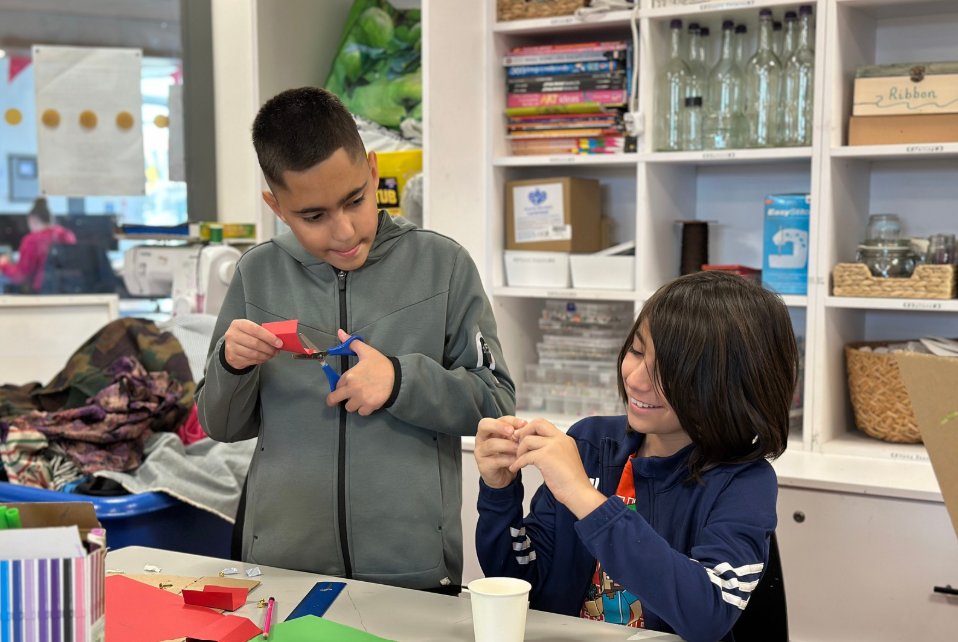
These experiences show what sustained connections can offer young people once they join the Arkwright programme. The wider challenge is to make those first encounters possible for young people who have not yet seen a place for themselves in STEM. By extending connections into the wider community, we can introduce many more young people to people, experiences and ideas that might otherwise remain outside their world.
Libraries and youth centres are especially important in closing this network gap. As trusted, accessible spaces at the heart of their communities, they can bring STEM engagement to younger audiences and to families who may have few existing connections with engineering, technology or science.
Through our STEM in the Community programmes, we work with partners to bring hands-on activities, employers and relatable role models directly into these settings. A single conversation, demonstration or chance to try something new can spark curiosity and help a young person begin to see STEM not as something unfamiliar or intimidating, but as something they can explore and enjoy.
Often, the most important outcome is the moment a young person recognises themselves in the people they meet and the possibilities they represent. Meeting engineers and innovators from a range of backgrounds can challenge assumptions about who belongs in STEM and open up ideas about study, apprenticeships and careers that they may never previously have considered.
Turning connections into opportunity
Closing the network gap is not simply about introducing young people to STEM. It is about ensuring that talent, wherever it is found, has the relationships, encouragement and access needed to flourish.
When schools, employers, alumni and community organisations work together, a young person’s background no longer has to define the people they can meet or the future they can imagine. Every introduction can widen a horizon; every shared experience can make an unfamiliar pathway feel possible.
By opening our networks and connecting them with the communities that need them most, we can help more young people turn curiosity into confidence, and confidence into opportunity.
If your organisation can offer funding, role models, workplace experiences or other support to connect more young people with engineering and technology, we would love to hear from you. Contact partnerships@smallpeicetrust.org.uk.